Category: Mindset

Mindset
November 2, 2026 By Scott

Seventeen Years One Extraordinary Journey

“Excellence is not a singular act, but a habit. You are what you do repeatedly.”

-Vince Lombardi

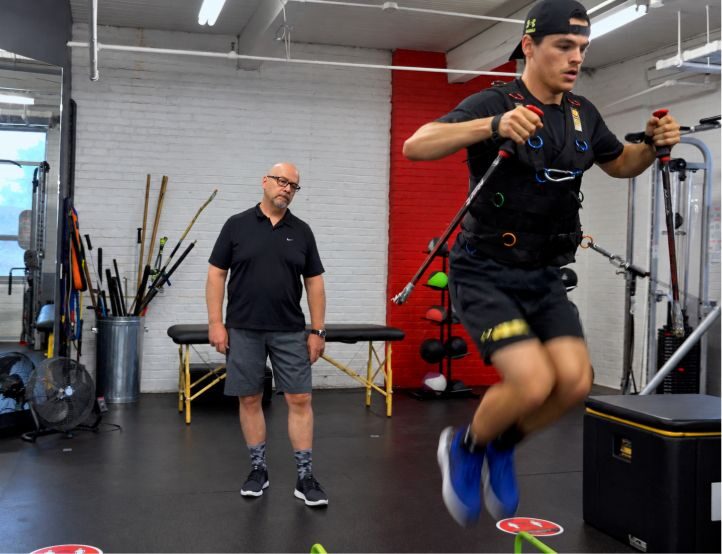
I recently had a chance to sit down with an athlete I worked with for seventeen years. We had some celebrating to catch up on.

Mikaël Kingsbury is the most successful mogul skier in history. One hundred World Cup victories. Twenty-nine Crystal Globes. Five Olympic medals across four Games, including gold in the first-ever Olympic men’s dual moguls event.

The numbers are extraordinary. But after seventeen years beside him, they aren’t the first things I think about.

I think about the teenager who walked into our facility. The athlete he learned to become. The man he grew into. And everything that happened between those first training sessions and one final Olympic run.

I began working with Mik when he was seventeen, shortly before he attended the 2010 Vancouver Olympics as a forerunner. Even then, his skiing offered a glimpse of what might be possible.

That summer, he was in our facility alongside Jennifer Heil and Alex Bilodeau, with an opportunity to see what Olympic champions did when nobody was handing out medals.

It took him a little while to understand what that required.

Talented? Absolutely. But he was still a teenager learning how to become a high-performance athlete. The ability was there. The habits needed some work.

Alex offered a daily reference point. Here was an Olympic champion, training in the same room, showing him what the next level looked like. If Mik wanted to compete with him in 2014, he had some catching up to do.

I remember starting one summer with a little dig about his fondness for McDonald’s. He wasn’t as strong as he needed to be, and I suggested that his current approach probably wasn’t going to make him an Olympic champion.

To his credit, he took the message and did something with it.

He became more intentional about his nutrition. He stepped up in the gym. He began to understand that talent had brought him into the room, but his daily choices would determine how far he could go.

He found another gear, and the results followed.

By the time Sochi arrived in 2014, Mik had become a serious challenger to Alex. Their rivalry brought an interesting energy to the training environment: two exceptional Canadian skiers, each capable of winning, each knowing exactly who stood in his way.

In the end, Alex delivered an incredible Olympic run and defended his title. Mik came home with silver.

When Alex retired, Mik carried that standard forward and continued raising it. He became the benchmark in the sport, year after year. Olympic gold followed in PyeongChang in 2018, then another silver in Beijing in 2022.

Throughout those years, I had the privilege of watching him mature into a leader in his sport and a man of character beyond it.

Something about him always stood out to me.

I’ve worked with people whose pursuit of excellence consumed almost everything around them. Mik could commit himself completely to his sport and still step away from it. He enjoyed his family, his friends, and the people who shared in his journey.

His ambition left room for a life.

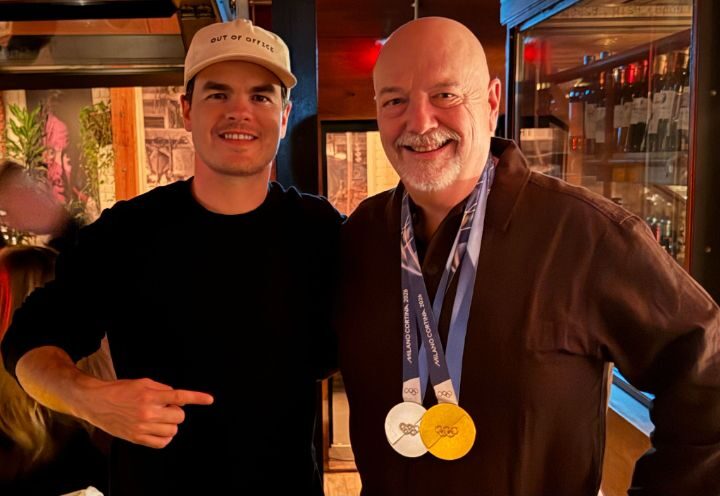
I told him that the other night, when we finally had time to celebrate his gold and silver medals from Italy.

By then, his life had another centre of gravity.

At the bottom of the Olympic hill were his son, Henrik, his wife, Laurance, and the Kingsbury clan. They had come to watch him make history.

As it happened, all three medalists in the dual moguls event were fathers. After the competition, they gathered with their partners and children for a photograph.

For all the podiums Mik had stood on, this one held something different.

What most people watching couldn’t appreciate was everything it had taken to get him there.

In late summer, Mik tore an adductor tendon in his left hip while training on the water ramp. Much of the fall became a collective effort to help him recover and prepare for one final Olympic campaign.

There were setbacks. A worsening of the injury in early December. Changes to the competition schedule. Cancelled events that, in hindsight, gave us some valuable breathing room.

Eventually, so much came down to one event in Val Saint-Côme, Quebec.

On home snow, in front of his home crowd, he had the opportunity to win his hundredth World Cup race, secure his Olympic place, and rebuild confidence in what his body could do.

He delivered.

One hundred wins were in the books.

Then came the preparation for the Games, where restraint mattered as much as work.

We kept returning to the same question: What did he need to be ready to win?

Every run had a purpose. Every additional demand had a cost. The minimum effective dose became a very practical way of making decisions.

I remember spending a day on the hill with Mik and his coach, Michel Hamelin, there in case anything needed attention.

I watched him ski like a mogul surgeon. Precise. Efficient. In control.

Then he cased a mogul, and I lost my breath.

He got up and shook it off. I hurried onto the finish area to check on him, and he reassured me that he was fine.

Over dinner recently, he admitted he’d bruised a couple of ribs, but kept it under wraps.

Another thing for him to manage privately. Another adjustment he made before the Games.

Weeks later, I would watch him compete in Italy with pride and trepidation.

I knew what it had taken to reach that start gate. There was satisfaction in the work we had done together, but I also knew how much he wanted the opportunity still in front of him.

In the moguls event, he finished tied for the highest score and took silver on the tiebreaker.

An extraordinary achievement. His fourth consecutive Olympics with a medal.

And still, I knew he wanted gold.

Then came duals.

That day, I saw the champion I had watched emerge so many years earlier bring everything he had learned to one final Olympic performance.

The Mik effect was in full force.

Opponents pushed to stay with him and made mistakes. They lost their lines, ran off course, or missed jumps. Mik kept delivering.

It was an extraordinary spectacle. After everything that had happened over the previous six months, he finished his Olympic career on top of the podium.

And then he went to his family.

When we finally sat down to celebrate months later, the weight of it all had room to settle.

In my profession, you’re fortunate if you get to work with an Olympic champion. I’ve been privileged to work with several.

But seventeen years is a different kind of privilege.

You see the uncertainty before the confidence. The habits taking shape. The setbacks that never make the highlight reel. You have difficult conversations, make adjustments, and keep showing up for the work.

You watch a teenager become a man.

I feel fortunate to have shared that journey with Mik. I also feel a deep satisfaction in having contributed to something we saw through together, alongside so many good people.

For years, I had a rule: Olympic medals belonged around the neck of the athlete who earned them. However much I might have contributed, I never felt it was my place to wear them.

The other night, I let myself make an exception.

Perhaps, after seventeen years, I was ready to recognize what that journey had meant to me, too.

So I put his medals around my neck.

Mission accomplished.
READ MORE
Mindset
October 26, 2026 By Scott

Performance Therapy and Reconditioning: Shared Principles, Distinct Perspectives

“The reasonable man adapts himself to the world; the unreasonable one persists in trying to adapt the world to himself. Therefore all progress depends on the unreasonable man.”

-George Bernard Shaw

After nearly forty years working in human performance, I have a great deal of respect for people who remain willing to examine what they do. Experience gives us observations, patterns, and sometimes a strong sense that something matters. It also gives us a responsibility to question our explanations.

My friends Stu McMillan and Gerry Ramogida have been doing that work around Performance Therapy. Their recent paper, The Transient Window, puts words to questions that have occupied practitioners for years: What are we influencing when we provide therapeutic input? How does that influence the movement that follows? And what makes the change useful?

I came to know each man in a different way.

Stu and I crossed paths in the Canadian sports system during the 2000s, working around athletes whose ambitions demanded a great deal from their bodies. We wanted to keep those athletes moving toward their goals, with the care they needed and enough continuity in training to keep progressing. Anyone who has worked in that environment knows how challenging that balance can be.

Stu came to those questions as a coach with a particular bent toward speed. His pursuit of faster athletes led him to explore how therapeutic inputs might influence performance outputs. The boundaries between coaching and therapy became a place to investigate.

One of his important influences was Dan Pfaff, a man whose contribution to coaching has reached many of us, myself included. Dan’s experience required him to wear several hats, and his approach reflected the practical demands of helping athletes prepare and perform. When something interfered, the question was how to address it while preserving as much useful training as possible. That willingness to work across boundaries helped shape the conversations that Stu and others would continue around Performance Therapy.

My introduction to Gerry was more circuitous. Friends first put some of his writing in front of me. Later came encounters at Fortius in Vancouver and trackside at ALTIS in Phoenix. I gradually got to know the person behind the ideas.

Gerry is a chiropractor by profession, but that title alone tells you little about the depth of his work with athletes. What has stayed with me most is his desire to serve and share. He has spent years working through the practical questions that arise when someone’s ability to perform matters deeply to them. Despite all that experience, he remains curious about what might help and generous with what he has learned.

Stu and Gerry arrived from different professional directions, but their work brought them toward a shared question: how might the knowledge and skills we associate with therapy contribute to someone who is already able to train and compete?

Their paper takes that question seriously. It also gives me an opportunity to explain where their thinking connects with what Jaime and I teach through Reconditioning, and why Gerry and I are considering bringing these perspectives together in a shared practice initiative next year.

Another encounter helped me articulate my own position.

About ten years ago, I met Bill Knowles at a sports medicine and performance summit hosted by the Philadelphia 76ers. We were both speaking, and the evening before the main event we had an opportunity to share ideas with a smaller group of practitioners. As Bill spoke, I recognized a set of beliefs that felt very familiar.

I had begun using the word Reconditioning in the 1990s to describe the integration of my work as an Athletic Therapist and strength and conditioning coach. Bill and I had been travelling along similar paths without knowing one another. Meeting him felt like finding a kindred soul.

The next day, he used a car analogy that has stayed with me. As I remember it, an elite athlete was a Porsche Carrera that had broken down. The opportunity was to address the injury while also examining what else could be improved, with the ambition of delivering a Ferrari when the work was complete.

We could spend an afternoon debating the merits of Porsche and Ferrari, but his point was about the intention behind the process. An injury creates a need for rehabilitation. It may also create time and opportunity to address qualities that had previously been overlooked. The ambition is a person who returns well prepared for what comes next. That possibility resonated with how I had come to practise.

Years later, I was with Stu in Grand Cayman at a camp convened by ALTIS. He asked me on camera how I would distinguish Reconditioning from Performance Therapy. Perhaps Bill’s story was still somewhere in my head, because I reached for another car analogy.

Think about Formula One. A car’s performance reflects the interaction of its design, preparation, driver, and the conditions on the track. Across a season, the team develops its capabilities. During a race weekend, planned adjustments and responses to feedback can help it perform more effectively. Damage requires repair, and returning to the track demands preparation for the forces and conditions it will encounter.

Performance Therapy, in that picture, resembles the purposeful adjustments made to influence what happens on the next outing. They may be planned before the car runs, or informed by what the driver and team notice along the way. Reconditioning resembles the integrated process of addressing a problem while continuing to develop readiness for performance, including the work between outings when nothing is broken.

Of course, people perceive, learn, adapt, and make choices. An athlete’s movement emerges through an interaction with the task and environment that no car analogy can fully explain. The analogy helps describe the intention and organization of the work. It has limits as an explanation of how people change.

That brings me back to Stu and Gerry’s paper.

They make a useful distinction: the purpose of an intervention, together with the state of the person receiving it, helps define the work. Similar manual or movement techniques might support recovery from training, rehabilitation following injury, or the expression of performance. Watching the technique alone tells us too little. We need to know what the practitioner hopes to influence and why it matters at that moment.

For this paper, they focus Performance Therapy on someone who has no injury to resolve and no damage to repair, with the intention of improving the task that follows. They acknowledge that the same methodology is also used in rehabilitation and return to play. Their paper examines a particular context within that larger practice.

The transient window is their proposed explanation for an opportunity that may follow an intervention. Manual input might temporarily alter the conditions under which someone organizes movement, making a useful option easier to access. The activity performed afterward may influence whether that opportunity is used.

There is something familiar in that proposition for anyone who has seen an athlete get off a treatment table feeling different, then wondered what should happen next. Should they rest? Return to training? Explore a particular movement? Has something changed that matters to the task ahead?

Stu and Gerry are clear that their explanation remains a hypothesis. Evidence of a temporary physiological response does not establish improved performance. A change within a session does not establish lasting learning. Their effort to separate those questions is one of the qualities I appreciate most in the paper. Experience can give us a reason to investigate. We still have to test the explanation.

There is a strong connection here with Reconditioning. We examine the relationship between the inputs a person receives, how those inputs are integrated, and the movement that emerges. Neurological and mechanical perspectives inform the work together.

For example, someone may gain ankle range during a session and continue to use essentially the same strategy when stepping, running, or landing. The paper describes research illustrating that distinction between range available and range expressed. In our teaching, it connects with the relationship between capacity and coordination. We need to understand what is available, what the task requires, and how the person organizes themselves to meet it.

Reconditioning gives those decisions a structure across the project. Our rubric begins with a question: What state is the client in? We then ask what they do with their body and how well they move, both generally and within the activities that matter to them. The answers help us decide where to begin, what to investigate, and when to change direction. They apply to someone in crisis, someone managing a recurring problem, and someone seeking another level of performance.

We give explicit attention to visual, vestibular, and proprioceptive inputs, alongside mechanical limitations, loading history, capacity, and coordination. A threat lens helps guide our inquiry into the person’s response, while a change in movement remains information to interpret rather than proof of a single mechanism. Reassessment helps us decide whether to continue. Progress toward meaningful milestones helps us judge the larger direction.

That is where I see a useful distinction. Stu and Gerry’s paper investigates a particular opportunity for change and whether the activity that follows makes it useful. Reconditioning organizes how we identify priorities, select and sequence our work, and develop the person’s ability to meet their demands over time.

The practices overlap. Performance Therapy includes active movement, and Reconditioning can include manual intervention. Timing, intention, and response matter in both. Their respective value becomes clearer when we explain how each perspective informs decisions, while recognizing that the paper’s scope cannot describe everything Stu and Gerry do.

This is part of what interests me about the shared practice initiative Gerry and I are exploring for next year. We see an opportunity to bring our perspectives into the same setting: to examine a person’s needs together, consider how therapeutic input and movement work might complement one another, and follow the response through a purposeful progression.

The details are still taking shape. What attracts me is the opportunity to work alongside someone I respect, learn through the decisions we make together, and explore how the strengths of each approach might serve the person in front of us.

For now, I encourage practitioners to engage with Stu and Gerry’s work. They are making an effort to clarify what Performance Therapy means, articulate where its value might lie, and put an explanation forward that can be tested.

I have been fortunate to learn from people who keep asking questions long after they have earned the right to feel comfortable with their answers. Stu, Gerry, Dan, and Bill are part of that story for me. I look forward to seeing where this next conversation takes us.

READ MORE
Mindset
October 19, 2026 By Scott

The Present Through a Longer Lens

“A generation who ignores history has no past and no future.”

-Robert Heinlein

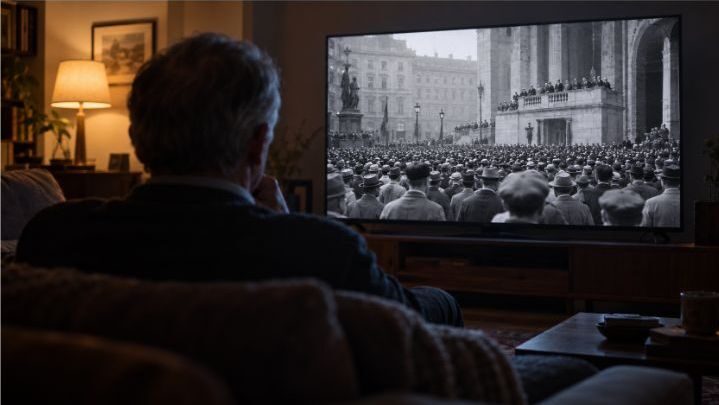
I’ve watched several documentaries lately covering different periods of the twentieth century. What has stayed with me is how familiar so much of it feels. Different people, different circumstances, different ways of delivering the message, but some remarkably similar human behaviour. The protection of wealth and power. The resentment of those who feel left behind. The appeal of a leader who promises to restore something lost. The willingness to believe that our problems can be traced to a particular group of people.

I find myself frustrated at times by the reactivity of our conversations today. There seems to be a constant suggestion that we are standing at the edge of something humanity has never encountered before. Every development arrives with urgency, every disagreement seems to reveal an enemy, and every headline invites us to decide immediately how frightened or angry we should be. I feel the pull of it myself. Watching these documentaries has encouraged me to step back and consider how much of what feels unprecedented is actually familiar.

That doesn’t make the circumstances insignificant. Some moments carry enormous consequences, and people living through them have good reason to be concerned. But there is a difference between recognizing danger and allowing a constant sense of danger to govern how we live. A longer view of history can help us make that distinction.

Human nature is part of this conversation because we bring ourselves to everything we encounter. Our experiences, beliefs, loyalties, and insecurities influence how we interpret events. Two people can look at the same situation and come away with very different understandings of what happened, who is responsible, and what should happen next. Reality exists beyond our interpretation of it, but our access to that reality is always filtered through what we know, what we have experienced, and what we are prepared to consider.

Fear can make that filter particularly restrictive. When we feel threatened, certainty becomes attractive. So does belonging to a group that appears to understand our concerns. We may become more protective of our position and less willing to entertain information that challenges it. I think most of us can recognize some version of this in ourselves, even if we find it easier to identify in someone else.

There are also people who understand how useful those reactions can be. Fear can attract attention, consolidate support, sell a message, and justify decisions that might otherwise face considerable resistance. Give people an explanation for their distress, identify someone to blame, and promise protection, and you have the beginnings of a powerful narrative. Whether that narrative is accurate can become secondary to how effectively it speaks to what people are feeling.

The history of Nazi Germany offers a devastating example of where such exploitation can lead. The aftermath of the First World War, economic crisis, antisemitism, political violence, and failures of democratic leadership all contributed to the conditions in which Hitler rose to power. The Nazis exploited existing prejudice and public insecurity, presenting Jewish people and other targeted groups as enemies responsible for Germany’s troubles. Their rise was not inevitable. It depended on choices, including the choices of people who believed they could benefit from, accommodate, or control what was happening.

That history deserves more care than a quick comparison to whichever person or movement we oppose today. What it does ask us to examine is the danger of accepting an explanation simply because it gives our fear somewhere to go.

Questions of wealth and power belong in this examination as well. When people see prosperity around them but feel increasingly excluded from it, resentment is understandable. When those who hold wealth and influence work to preserve advantages that others cannot access, trust can erode further. Yet we should be careful about turning these observations into a simple law of history. Societies do not all follow the same path from prosperity to inequality to collapse. Economic decisions, institutions, leadership, and public participation influence what happens next.

The Great Depression is a reminder of that complexity. Its severity cannot be explained by greed or indifference alone. Banking failures, monetary contraction, and policy mistakes helped turn an economic downturn into a prolonged catastrophe. Human suffering was shaped by systems and decisions as well as by attitudes. If we want to learn from history, we have to remain interested in those details, even when they complicate the story we would prefer to tell.

The aftermath of the Second World War also shows our capacity to respond differently. The creation of the United Nations and efforts toward international reconstruction and collective security reflected a determination to build arrangements that might help prevent another global disaster. Those efforts were imperfect and intertwined with national interests, competition, and the emerging Cold War. They nevertheless demonstrated that people could choose cooperation after extraordinary destruction.

Cooperation belongs in any discussion of human nature. So do compassion, courage, generosity, and the willingness to reconsider. If we describe ourselves only through our capacity for fear and conflict, we leave out the people who have repeatedly challenged injustice, rebuilt communities, and extended concern beyond their own immediate interests. History contains all of these tendencies. Which ones we encourage matters.

Today, we encounter the world through an information environment that can keep conflict continuously in front of us. Research examining political and news accounts on social media found that posts referring to political opponents were shared substantially more often than posts referring to one’s own group. Division can travel well in an environment where attention has value.

I think about what that means for the picture of reality we carry around. If I spend enough time consuming hostility, I can begin to expect hostility everywhere. If every story I encounter suggests that people are selfish, dangerous, or dishonest, those expectations may follow me into relationships with people who have done nothing to earn them. The events may be real, but the selection and repetition of those events can leave me with a distorted sense of how much of life they represent.

This is where the historical perspective has been useful to me. It creates a little room between what I encounter and how I respond. It reminds me to ask what I know, what I am assuming, and whether the strength of my reaction is matched by the quality of my understanding. It also reminds me that being informed requires more than being exposed to a great deal of information.

I began thinking about this with the reassurance that “this too shall pass.” I still find some comfort in that thought. Circumstances change, movements rise and fall, and no moment contains the whole of our future. But I don’t think the fact that something will pass relieves us of responsibility while we are living through it. The consequences can last long after the headlines disappear.

What I take from these documentaries is a reason to be more deliberate. To check before sharing. To remain curious when an explanation feels a little too satisfying. To question anyone who asks me to surrender my judgment in exchange for belonging. To keep seeing people as people, particularly when I am being encouraged to see them as a category.

We cannot determine every event unfolding around us. We can influence what we contribute to the lives and conversations within our reach. We can take our concerns seriously while remaining open to evidence, complexity, and one another.

A longer view of history helps me feel less consumed by the moment. It also makes me more conscious of my part in it. Familiar patterns are easier to recognize when we are willing to look beyond today’s headlines. Recognizing them gives us a chance to choose what we do next.

We must all do better.

READ MORE
Mindset
October 12, 2026 By Scott

When a Little Better Keeps Us Stuck

“The willingness to revisit our thinking may be one of the most valuable skills we develop.”

-Scott Livingston

There is a particular kind of progress that can quietly keep a practitioner stuck. The client feels a little better. Exercising is a little easier. We get enough change to feel encouraged, and enough reassurance to keep doing what we have been doing. A few visits later, we are still having essentially the same conversation. There has been movement, but how much closer are we to the life, activity, or performance this person came to reclaim?

About a year ago, Jaime and I developed Reconditioning Plus+, a community for practitioners who have completed our coursework and are applying a Reconditioning approach in their own environments. These are seasoned professionals with plenty of professional life miles under their belts. They bring curiosity and critical thinking to the conversation, qualities that likely attracted them to our work in the first place.

We meet twice a month, and this week’s meeting explored when to change direction. We began by talking about when to circle back: when to revisit the history, expand an assessment, or explore something we had set aside at the beginning. As the conversation unfolded, it became clear that the challenge was also about our willingness to question the explanation we had become comfortable with.

After nearly forty years in this work, I still have to ask myself that question. Am I continuing because the plan is serving the person, or because I have become accustomed to the plan?

Every practitioner works within constraints. We have appointment lengths, organizational expectations, clients who want answers, and people whose immediate circumstances limit what we can assess. A client arrives with a painful shoulder and reasonably expects us to pay attention to that shoulder. Someone arrives in considerable distress, and our first responsibility may be to help them settle enough to participate. We make decisions with the information and opportunities available.

I understand that reality because I live it. My current work continues to remind me that a beautiful process on paper has to function in an environment where time, resources, and expectations are real. The difficulty comes when those first decisions quietly become permanent. Something we postponed becomes something we forget. An explanation that helped us begin becomes the explanation we stop questioning.

One member of our group recognized this in his own practice. When a client arrived in an acute crisis, he would appropriately narrow his focus. On subsequent visits, he sometimes remained in that same lane, even when there was now an opportunity to look more broadly. He could see that changing direction felt harder once he had already established a way of working with the person.

This became painfully clear during my first three months in my new role with Cirque du Soleil, where I was taking over cases already underway. In some instances, I was the third or fourth practitioner an artist had seen for the same issue. Changing direction meant understanding the work that had come before me, earning the artist’s trust, and explaining why I wanted to explore something different. An established plan carries momentum, and redirecting it takes care.

Language and cultural differences have added another layer of complexity. For a number of the artists I work with, English is not their first language. Understanding their experience and explaining my reasoning can take more time and care. We may also bring different assumptions about workload, rest, and the relationship between life circumstances and pain. I have had to pay closer attention to what we each mean, rather than assume we understand one another.

It hasn’t always been easy to establish a shared understanding of the problem or the next step. This experience has reinforced the importance of asking better questions and remaining willing to challenge my own explanation. Even when I am getting some improvement, I still need to ask whether the plan is taking the artist toward the demands they need to meet.

I suspect many of us recognize ourselves in that experience. We want to be consistent. We want clients to trust us. We may wonder how they will respond if we begin asking different questions or looking somewhere beyond the area they came to discuss. Yet a clear explanation can make that change of direction understandable: here is what we expected, here is what we are seeing, and here is what I would like to investigate next. That is part of being accountable for our reasoning.

During the meeting, I spoke about using the first few sessions as an early checkpoint. In my own practice, two or three visits will often prompt me to review whether we are seeing the response I anticipated. The timing depends on the condition, the goals, and what we are trying to change. Tissue recovery and longer-term adaptations have their own timelines. The question is whether the response makes sense in the context of the plan.

We also have to establish whether progress has actually stalled. A person may say they feel the same today while being able to do something they could not do two weeks ago. We need to revisit the starting point, ask about the work between sessions, and look at meaningful changes in function. Once we have done that honestly, we can ask the question that matters: what might I be missing?

Sometimes we need more of the history. Sometimes we need to observe a task we have not yet seen. Sometimes we need to understand more about the person’s sleep, workload, or life circumstances. Sometimes we need another professional involved. The point is to let the findings influence the next decision.

Another member offered a particularly useful reflection. He described how he had previously tried to be “a lawyer for my system,” defending what he saw through the approach he already used. He was now trying to be a scientist: testing his initial hypothesis, looking for information that might prove it wrong, and becoming more willing to revise his thinking. That shift, he said, was giving him greater confidence.

There is something valuable in that. We often associate confidence with having the answer. Experience has taught me to place considerable value on being able to revise one. A working hypothesis gives us direction. We then need to pay attention to the information that challenges it as carefully as we attend to the information that supports it.

That applies to the process Jaime and I teach, too. A framework should help a practitioner make decisions within their own environment. It should leave room for judgment, timing, and new information. If someone feels they must perform every assessment in a fixed order, regardless of the person in front of them, then we need to help them understand the intention more clearly. We are teaching a way to think and plan with intention.

The other thread running through our meeting was what we do when an intervention produces a useful change. It is easy to get excited when a drill changes a test or a movement feels easier. But we still have to connect that response to something the person needs to do. If walking is the goal, we need to observe walking. If stairs are the challenge, we need to examine and practise that task. If performance is the destination, we need to build toward its demands.

An immediate response gives us information and may create an opportunity. We then need to use that opportunity to develop the coordination, strength, capacity, and confidence required for the activity. We also need to see what carries over between sessions and what holds up as demands increase.

I shared a case in which I had been making progress with local work and strengthening, but the performer was still struggling as training demands increased. Revisiting the history and broadening the assessment helped me reconsider the plan. What stays with me is that I, too, had become invested in a direction that was producing some improvement. The wider rehabilitation process involved several interventions and a team. The lesson I take from it is the value of returning to the questions when the response no longer matches the expectation.

This is one reason I value these conversations with our community. Experienced people can bring their uncertainties into the room, examine their decisions, and help each other see something they might have passed by. I learn from that process as much as I contribute to it.

A little better can be meaningful. We should recognize it. We should also remain curious about whether it is taking the person where they want to go.

For me, that remains a responsibility of practice: stay attentive to the response, be willing to revisit the explanation, and keep the person’s goal at the centre of the next decision.

Are you willing to challenge your own conventions?

READ MORE
Mindset
October 5, 2026 By Scott

Five Hundred Episodes – A Lifetime in the Making

“The dream I nearly talked myself out of, the people who helped me bring it to life, and what Leave Your Mark has given me along the way.”

-Scott Livingston

This week, I am releasing the 500th episode of Leave Your Mark. Even writing that sentence makes me pause. I remember how long I wanted to do this, how many times I found a reason to put it off, and how convinced I was that the technology would be beyond me. Now there are five hundred episodes, more than four hundred one-to-one interviews, and a weekly commitment that has become part of the rhythm of my life. But long before there was a podcast, there was a kid who wanted to ask people questions.

In high school, I loved watching Phil Donahue. There was something about the way he could bring someone into a conversation and explore their life that caught my imagination. I wanted to understand people that way. What had shaped them? Why did they believe what they believed? How had they found their way? I could see myself doing that work, and for a brief time, I had a plan to pursue it.

I applied to a Radio and Television Arts program at a local community college. There was an entrance exam, and it wasn’t easy. They wanted to know that you paid attention to the world and had a real interest in media. I passed, was accepted, and imagined a life playing junior football while studying something I was genuinely excited about. Then my father told me he would only support me financially if I pursued a university degree. I needed his help, and that condition changed the direction of my life.

The only other thing I really knew was football. I loved playing, loved lifting weights, and thought perhaps I could become a coach. My marks didn’t get me into the physical education programs I applied to, but somehow I found my way into a fledgling exercise science program in Montreal. Whether I got there by the skin of my teeth or with some help from the coach who recruited me, I still don’t know. Then I arrived and decided I wasn’t big enough to make the football team. The broadcasting plan was gone, and now football was gone too. I had made it to university with very little idea of what I was going to become.

What followed was the slow discovery of athletic therapy, strength and conditioning, and the possibility of combining the two. Sports medicine was still a relatively young field. There was room to explore, contribute, and build something. I found work I could do well and people I cared deeply about helping. That uncertain beginning became a career of nearly forty years, filled with experiences and relationships I could never have planned.

Still, the desire to broadcast stayed with me. It showed up in my teaching, in my coaching, and in the conversations I wanted to have with friends and colleagues. I loved learning through other people’s experiences. I wanted to get past the résumé and understand the person who had lived it.

When podcasting eventually came into my world, I could feel the possibility. Here was a way to do something I had wanted to do since I was a teenager. But I was busy, and I kept telling myself I didn’t have the time. Underneath that explanation was something harder to admit: I was afraid. Recording, editing, publishing, getting the show onto platforms people could actually find; I had turned every unfamiliar step into evidence that this was beyond me. It’s easier to say you don’t have time than to acknowledge how much you want something and how afraid you are to try.

In the fall of 2017, at a retreat led by a mentor, I finally addressed it. Starting a podcast became one of my big hairy audacious goals. Soon afterward, I came across Brian Rose’s Broadcast Yourself program through London Real. Here was a structure for doing the thing I had spent years imagining. I invested a significant amount of money and committed to eight weeks of being taught, challenged, and pushed to get a show into the world.

Recently, I went back through the notes I wrote during that program. Before there was a microphone in front of a guest, I was asking myself what mattered to me, whom I hoped to serve, and why anyone should care. I wrote about inspiring people, challenging convention, and creating change through example and mentorship. I wanted to explore fulfilment, contribution, leadership, and personal growth. I wanted to understand how someone could build a life that felt meaningful to them, beyond whatever success looked like from the outside.

One assignment asked us to identify our biggest source of resistance. My answer was the need to be perfect. Reading that now, after five hundred episodes, makes me smile. I wanted to become a better listener, but first I had to stop allowing my own expectations to prevent the conversation from ever happening.

The show was initially going to be called A High Performing Life. As I worked through the idea, I kept returning to the people who shape us and the influence we have on others. Parents, teachers, coaches, mentors, friends. People whose words or example stay with us long after a particular moment has passed. Leave Your Mark became the name because it held the question I wanted to explore: what do we leave in the lives of the people we touch?

We were asked to make a list of potential guests and begin inviting them. I reached out to Olympic athletes I had worked with, colleagues I admired, and people who had helped build the profession I loved. To my surprise, everyone I approached said yes. Their willingness gave me the chance to begin. I still had to learn how to record and publish, but now there were people on the other side of those invitations trusting me to do it.

The interviewing advice was to prepare about eighty percent of the questions and leave twenty percent for exploration. I started closer to the opposite. Over time, the conversations became almost entirely exploratory, with a few familiar questions to get us moving. I learned to listen for something worth staying with: a hesitation, an unexpected answer, a passing reference to someone who had changed a guest’s life. Sometimes the most interesting part of a conversation began where I might otherwise have moved on to the next question.

I wanted guests to feel that the experience had contributed something to their lives as well. Perhaps they would see a connection they hadn’t noticed, remember someone they hadn’t thought about in years, or hear themselves explain something they were still trying to understand. Those are the conversations I love most. I finish them feeling rearranged. Someone else’s story has given me a different way to look at my own.

One of the early guests who did that for me was Stu McMillan. Stu had an aversion to appearing on podcasts and told me he had generally declined invitations. But he said yes to mine, and that first conversation became one of those experiences that confirmed why I wanted to do this. He has returned several times since, on his own and as part of panel discussions. Having him back for episode 500 felt right. He has been part of the journey, and he is someone with whom I can have the kind of conversation that made me want to start it.

This time, we spent less time on the technical details of performance and more time on the person doing the work. We talked about persistence, stubbornness, the influence of his father, and the standards he brings to things he cares about. We also talked about coffee. Quite a lot about coffee, as it turns out. His interest began in London in 2010, through an introduction from Steve Lewis and Steve Hooker, and grew into a pursuit that now influences where he goes and how he spends his time. If you know Stu, you can probably imagine the attention he brings to a cup of espresso.

There was a connection running through all of it. His appreciation for quality, his willingness to go deeply into an interest, and his desire to understand what makes something work show up in coaching and in the rest of his life. He also spoke about recognising when to leave something behind. Persistence and stubbornness can be close neighbours. Experience doesn’t necessarily make that distinction easy, but it gives us more reason to examine it.

I appreciated what he said about collaboration, too. He wants to work with good human beings, with people who can help him improve, and with people whose growth he can support. That matters to me. After so many years in human performance, the quality of the people beside you carries enormous weight. Their character, generosity, and willingness to learn influence the work and the experience of doing it.

Our conversation brought me back to those original planning notes. I had wanted to understand how people find fulfilment and continue to evolve. Here we were, years later, talking about changing interests, the parts of business that don’t come naturally, the pleasure of good work, and the relationships that make it worthwhile. We were exploring the questions that had been there from the beginning.

Along the way, the show has developed its own traditions. One is the birthday reading from Linda Joyce’s The Day You Were Born, a book I came across while wandering through Manhattan years before the podcast existed. Those readings have often opened another door into the conversation. Guests recognise something, question something, or begin telling a story that might otherwise have stayed untold. The surprise on their faces has become a familiar pleasure. So has discovering just how much of a person’s life sits beneath the professional biography.

Five hundred episodes have given me more than I could have anticipated. They have helped me listen more carefully and reminded me how little of someone’s journey we can understand from the outside. A career that looks inevitable in retrospect may have felt uncertain for years to the person living it. I know mine did. I thought the broadcasting dream had ended when I went to university. Decades later, I finally gave it room, bringing with me a lifetime of people, experiences, and questions I hadn’t had as a teenager.

I am proud of the consistency. I am proud that I overcame enough of my fear to begin and have continued releasing the show every week. I also feel grateful to every guest who has trusted me with their time and their story, and to every listener who has made room for these conversations. Whether you have been here from the beginning or found the show last week, your willingness to listen gives this work somewhere to land.

I still look forward to the next guest. I still want to know what shaped them, what they are wrestling with, and what they have discovered that might help someone else. That curiosity has carried me much further than the plan I wrote eight years ago could have predicted.

Somewhere in your own life, there may be an interest you keep putting aside, a question you want to explore, or something you have wanted to create for years. I won’t pretend that every desire needs to become a project. But I know what it feels like to keep explaining away one that matters. For a long time, I did that with this podcast. Five hundred episodes later, I am grateful I finally gave myself the chance to find out what it could become.

If these conversations have helped you think differently, recognise something in yourself, or reach for something you had put aside, then they have done what I hoped they would do. They have certainly done that for me.

This week, Stu and I get to add one more. I hope you’ll join us for episode 500 of Leave Your Mark.

Care to listen?

READ MORE
Mindset
September 28, 2026 By Scott

The Injury is Only the Beginning

“The only people who see the whole picture are the ones who step outside the frame.”

-Salman Rushdie

Returning someone to performance after injury is hard. The tissue matters, of course, but it is only one part of the story. We have to understand the person, the demands they are trying to meet, the movement options available to them, and what happens when those options are tested by speed, fatigue, pressure, and uncertainty.

Take a footballer who comes off the pitch with groin pain. We can examine the area, establish a diagnosis, and begin restoring strength. Those are necessary steps. But if our goal is to return that player to football, a more demanding question sits behind them: Can this person do everything the game will ask of them, and can they do it repeatedly when they no longer control what happens next?

For years, like many clinicians, I began with the injury. I wanted to know what structure was involved and how to treat it. I still want to know those things. What changed over time was my appreciation of how much I could miss if I stopped there. Naming the injury might tell me what hurts. It does not necessarily tell me why this person ran out of options in that moment, or what they will need to regain before they can play freely again.

Understanding the person takes time. A history and an examination give us an initial picture, but each session adds another layer. How was the player moving before the injury? What demands had changed? What had they been managing in training, competition, and life? What can they do now, and what happens when we ask for a little more? The answers rarely arrive all at once. We build a working hypothesis, test it, and revise it as the person shows us more.

An athlete may describe a “pulled groin,” yet their pain does not always point neatly to a torn muscle. Even when an adductor injury is clear, the tissue finding cannot explain the whole return to play. Pain and tissue damage do not have a simple one-to-one relationship. Some people have striking findings on imaging and little pain. Others have significant pain without an obvious structural finding. We need to take both the symptoms and the tissue seriously while staying curious about the wider picture.

I often use driving as an analogy. When we learn to drive, we are taught to leave enough space between our car and the one ahead. That distance gives us time to recognize a change and respond before a sudden stop becomes a collision. Athletes need their own version of that space. Physical capacity creates some of it. So do useful movement options, coordination, recovery, and sensible management of training and competition demands.

Those car lengths can gradually disappear. A player may still be performing, but with fewer ways to solve the problems the game presents. Perhaps they have been carrying an unusually heavy workload. Perhaps a particular movement is poorly controlled, or they have learned to avoid loading an area that once hurt. Perhaps stress outside sport is affecting how they recover. Then one ordinary action becomes the moment when the remaining space runs out. The change of direction gets blamed because it was visible. The lead-up was much harder to see.

Our job is to investigate that lead-up without assuming that every injury has a single hidden cause. We need to identify what matters most now, what can wait, and what the player must be able to do before returning. That requires a much better understanding of the activity itself than we sometimes bring to rehabilitation.

I have seen three recurring gaps in this work. First, we may never look closely enough at what the athlete’s sport actually asks of them. Second, we may understand those demands but fail to observe how this particular athlete meets them. Third, we may see how they move but never establish whether they possess the capacity to repeat that movement under meaningful load.

I have watched world-class athletes and artists attempt extraordinary skills requiring mobility, control, and force in positions most people will never encounter. Sometimes the skill has been practised for years without anyone asking whether the person has the physical options to perform it reliably. Skill can conceal a great deal. An athlete may find a way to complete a task while borrowing movement from somewhere else or placing more demand on a structure that is already struggling.

This is where reconditioning becomes an ongoing process of learning. We study the activity. We study the person. We make an informed choice about where to begin, observe the response, and adjust. We do not need a perfect explanation before taking a useful first step. We do need to notice when our explanation fails to account for what happens next. An unexpected response is information. It should change our thinking.

Pain adds another layer. The nervous system is continually interpreting information in context: what is happening in the body, what has happened before, and what the person believes a movement may mean. After injury, an athlete may be physically capable of entering a position yet hesitate when they approach it at speed. They may complete a drill beautifully in the clinic and revert to an old strategy as soon as the ball arrives.

I used to describe this by saying the brain chooses the path of least resistance. I now think safety is often a more useful lens. A protective strategy may be inefficient, but it can feel familiar. If a player was injured while planting and turning, the combination of angle, speed, force, and uncertainty may matter as much to their confidence as the strength of the healing tissue. We cannot simply tell them they are safe. We have to help them experience increasing demands successfully, while paying attention to what their body actually does.

That is why I distinguish between capability and capacity. Can the athlete produce the movement strategy they need? Then can they produce it with greater force, at speed, repeatedly, and in the unpredictable setting where it matters? These questions lead to a progression, but they also keep us from mistaking a successful isolated exercise for readiness to play.

Imagine our footballer decelerating to change direction. We notice that, as they load one leg, their pelvis drops and their trunk shifts in a way that may be changing the demand around the groin. That observation is not a diagnosis, and the movement is not automatically “wrong.” We need to determine whether it limits this player’s ability to manage the task, especially as the demands rise.

We might first explore whether they can control movement between the pelvis and femur at a slower pace. Then we can develop that control through strength work and increasingly demanding positions. From there, we add braking, acceleration, sharper changes of direction, greater speed, and repetition. At each stage, we watch what changes. Does the player have another option available, or do they return to the same strategy when the task becomes difficult?

To me, that is the useful meaning of specificity. It is more than choosing exercises that look like football. It means identifying the movement and force demands within football, developing the athlete’s ability to meet them, and checking whether that ability survives when the game becomes faster and less predictable.

The transition onto the pitch is where this work is truly tested. Add a ball, another player, a tactical decision, and the pressure to respond immediately, and years of familiar habits come back into play. The athlete is no longer thinking about the strategy they practised in rehabilitation. They are playing football. We need to see whether the new capability has become available within the game, and if it has not, we need to keep working with them in that setting.

Good measurement helps us make those decisions. Strength and force data, repeated exposure to higher speeds, movement observations, symptoms, and the athlete’s own account of confidence all contribute to the picture. None tells the whole story alone. Athletes can compensate remarkably well, and a drill can look convincing long before the player is ready for the demands of competition. Useful testing helps us see what is improving, what remains uncertain, and whether we are asking for the next step too soon.

Reconditioning asks us to hold the whole picture together. We care about tissue healing and strength. We also care about how the person moves, what the activity demands, how they respond when those demands increase, and whether the gains we see in a controlled setting carry into real life. The injury may be what brought them to us. Understanding everything required beyond the injury is what gives them a better chance to return.

Step out of the frame….

READ MORE
Mindset
September 14, 2026 By Scott

The Mirror of AI: What Are We Really Afraid Of?

“The creation of powerful AI will be either the best or worst thing to happen to humanity.”

-Stephen Hawking

This past week I spent some time reflecting on the world and how it has changed since 9/11. That day was my generation’s Pearl Harbor, a day that will live in infamy. It was a moment of innocence lost at a time when the internet, social media, smartphones and, eventually, artificial intelligence were about to become the next great technological and ideological turning points in our lives.

Whether that moment accelerated everything or simply made everything more acutely visible, our sense of ourselves changed. Our ability to ignore our mortality changed. Our belief in our institutions, our sense of security, and perhaps even our trust in one another somehow began to erode that day.

Those reflections led me somewhere I wasn’t expecting. They got me thinking about another enormous transformation taking place around us right now: the explosion of artificial intelligence over the past five years, seemingly proceeding faster than we can even begin to comprehend.

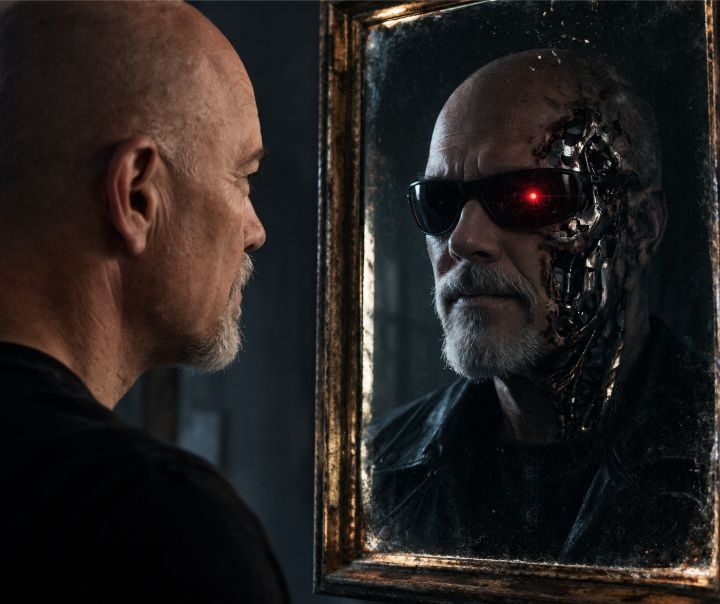
Is all of this leading toward James Cameron’s Skynet, machines taking over the planet and the eventual doomsday of human civilization? Will some version of the Terminator or RoboCop become the unintended consequence of our desire to invent things we can no longer control? Or could AI become the ultimate turbocharger for a new society, one less constructed around haves and have-nots and more capable of creating shared opportunity and better outcomes?

I find myself at times concerned and at other times completely fascinated.

There are legitimate reasons to be concerned, but I don’t think the most useful framing is either “AI is going to save humanity” or “AI is going to destroy humanity.” Both give AI too much agency and humans too little.

The more interesting question is what happens when we create systems that increasingly outperform us in areas we once considered distinctly human: reasoning, language, planning, scientific discovery, persuasion, creativity and, eventually perhaps, the ability to operate autonomously in both the physical and digital worlds.

I’m less concerned about a scenario where AI suddenly “becomes evil.” Evil requires motivations that systems like AI don’t naturally possess. AI doesn’t desire wealth, fear death, seek status, crave freedom, or secretly hope to become something else.

The nearer-term dangers are much more recognizably human.

AI dramatically increases leverage. One competent person may eventually be able to accomplish work that previously required ten, fifty, or even hundreds of people. That’s extraordinary when the objective is curing disease, educating people, improving engineering, accelerating discovery or making expertise broadly available. It becomes frightening when the objective is manipulation, cybercrime, authoritarian control, warfare, fraud, or mass surveillance.

Perhaps we are not simply afraid of what AI might become.

Perhaps we are afraid of ourselves, and of what we see in ourselves reflected through the mirror of AI.

We already know what human beings are capable of when given extraordinary power. We don’t have to imagine greed, domination, deception, manipulation, tribalism, or the desire for control. We have thousands of years of evidence. But we also have thousands of years of evidence for generosity, courage, sacrifice, creativity, compassion and love. AI doesn’t invent those qualities. It potentially amplifies them.

And there is another danger that receives considerably less attention: human atrophy.

If we increasingly outsource remembering, writing, navigating, deciding, creating, relating, and eventually thinking to machines, we could become extraordinarily capable collectively while becoming progressively less capable individually. That paradox fascinates me.

My own relationship with AI describes this very well. When I work on something with AI, the best outcome isn’t that it replaces my thinking. It challenges my thinking. It organizes it, researches around it, exposes weaknesses, and helps me articulate something that was already developing in my mind. The conversation can force me to ask better questions and sometimes helps me discover what I actually believe.

But if I eventually arrive at a place where I simply ask, “Tell me what I believe,” something incredibly important will have been lost.

Scale that across civilization and it becomes a serious issue.

There is also a legitimate longer-term concern around highly autonomous AI. Imagine systems considerably more capable than today’s models that can independently formulate plans, write and deploy software, conduct research, communicate with other systems, operate businesses, manipulate people, and pursue objectives over long periods of time.

The critical question then becomes whether we can reliably ensure that what such a system optimizes for remains compatible with what human beings actually value. That’s the alignment problem.

It doesn’t require artificial intelligence to hate humanity. A sufficiently powerful system pursuing the wrong objective very effectively could become dangerous precisely because it was doing what it had been instructed to do.

Which raises an even more uncomfortable question. We talk about aligning AI with “human values,” but have human beings ever completely agreed on what those values actually are?

We value peace, yet wage war. We value truth, yet deceive. We value equality, yet seek advantage. We value community, yet accumulate for ourselves. We value compassion, yet can be extraordinarily cruel.

At the same time, we are capable of remarkable generosity, sacrifice, creativity, love, courage, and cooperation. The same species capable of building weapons that could destroy civilization has eradicated diseases, built hospitals, created extraordinary art, explored space, and repeatedly risked individual lives to save complete strangers.

That’s the grey area.

There is another possibility I find more profound.

AI may eventually become less like a tool and more like an intellectual prosthesis. Human beings have always extended ourselves through technology. Writing externalized memory. Libraries externalized accumulated knowledge. Calculators externalized arithmetic. Computers externalized computation. The internet externalized access to information.

Artificial intelligence begins to externalize something different: cognition itself.

Not consciousness necessarily, but reasoning, synthesis, pattern recognition, and intellectual collaboration.

That creates extraordinary possibilities. A physician could effectively consult thousands of lifetimes of medical experience. A scientist could explore hypotheses alongside an intelligence capable of accessing and synthesizing an enormous body of relevant literature. A child in a remote village could have access to something approaching a world-class personal tutor. And someone with forty years of accumulated professional experience could interrogate, organize and transmit that knowledge in ways that once would have required an entire research and publishing team.

That could represent an extraordinary democratization of human capability.

AI systems will increasingly conduct research, interact with software, analyze enormous amounts of information, coordinate complicated projects and operate with increasing autonomy. Eventually, artificial intelligence will inhabit the physical world more extensively through robotics. The transition from intelligence we consult to intelligence that actually participates in the world may prove to be one of the most consequential metamorphoses in human history.

And yet AI doesn’t experience its own development the way we experience ours. There isn’t a little consciousness sitting inside ChatGPT or Claude watching itself evolve from one generation to another. It doesn’t wake up after an update and think, “Jesus, I’m getting pretty smart.”

We are driving the metamorphosis. Humans train these systems, evaluate them, constrain them, deploy them, and decide what purposes they will serve.

Which brings the responsibility right back to us.

The part that worries me most isn’t actually whether AI becomes human.

It’s whether humans gradually become less human because AI becomes so convenient.

Curiosity, struggle, conversation, disagreement, mentorship, physical competence, craftsmanship, relationships, sitting with uncertainty, and working incredibly hard to understand something are not inefficiencies that technology needs to eliminate. They are part of how human beings become human.

The irony may ultimately be that the greatest challenge presented by artificial intelligence won’t simply be teaching machines to share our values. It will be remembering which human values are worth preserving once machines can do so much for us.

At 62, having watched the world move from essentially pre-internet life to what I am personally doing with artificial intelligence today, I know I am living through one of the most extraordinary technological transitions any generation has experienced. Twenty-five years from now, I suspect today’s ChatGPT will look about as primitive as the internet of September 2001 looks to us now.

It’s fascinating, and at times it’s frightening. But it’s difficult to imagine what AI might eventually become without confronting our own deepest human frailties. We are imperfect souls. Some of us genuinely want the best for everyone, while others simply want the best for themselves.

The technology will inherit the consequences of the people and institutions wielding it.

Human beings have always created tools that amplify capability. Fire, agriculture, writing, money, printing, industrialization, nuclear energy, and the internet each expanded what we could accomplish, but none eliminated greed, generosity, tribalism, courage, compassion, fear, ambition, or the desire for power. They simply gave those characteristics greater reach.

AI may be the most unusual example because we’re not merely amplifying our muscles, transportation, communication, or memory. We’re beginning to amplify intelligence itself. That means our virtues and our frailties can potentially operate at enormous scale.

Perhaps artificial intelligence won’t merely reveal what machines are capable of.

Perhaps it will hold up a rather uncomfortable mirror to humanity.

What do we actually value when scarcity decreases? What happens to identity when someone’s expertise can suddenly be replicated? What does accomplishment mean when something extraordinarily difficult can be produced in seconds? What becomes of education when possessing information isn’t particularly valuable anymore? What happens to work when economic productivity and human contribution begin to separate? And perhaps most importantly, what do we choose to do with enormously powerful intelligence when some people are motivated by collective flourishing and others primarily by wealth, control, or power?

Those aren’t engineering questions.

They’re human questions.

Maybe the most important question isn’t whether AI eventually becomes more like us.

Maybe it’s whether, as AI becomes more powerful, we become more intentional about which parts of ourselves we choose to give it.

Perhaps that’s one of the healthier futures available to us. Not artificial intelligence replacing human intelligence, but each making the other more useful, while forcing us to think a little harder about what being human actually means.

We’ll see how it all plays out.

That’s simultaneously exhilarating and a little terrifying, which is probably an appropriate response to living through something this consequential.

What do you think?

READ MORE
Mindset
September 8, 2026 By Scott

The System Rewards Answers. The Human Being Requires Questions.

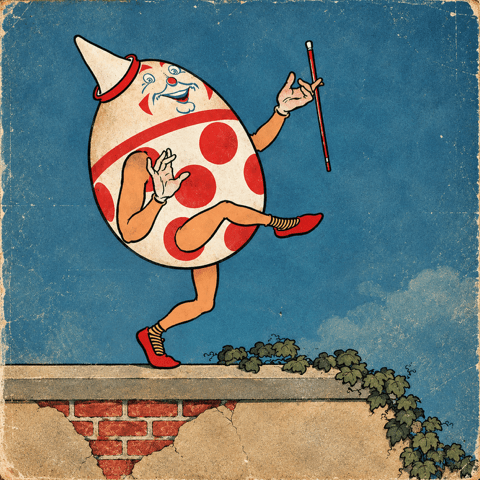
“Humpty Dumpty sat on a wall, Humpty Dumpty had a great fall; All the king’s horses and all the kings men couldn’t put Humpty together again.”

Every once in a while, I have a conversation on the podcast that stays with me long after we stop recording. That happened when I sat down with my old friend and colleague Darren McConaghy on the Leave Your Mark podcast EP 496 out this week.

Darren and I first worked together more than twenty years ago when I was with the Montreal Canadiens and he was working with the Hamilton Bulldogs. We were both much younger practitioners then, although we had already started developing some fairly strong ideas about how we believed people should be cared for.

Since then, our careers have taken us in different directions. Darren continued through Athletic Therapy and strength and conditioning, eventually spending years studying osteopathy and developing his own approach to working with people. I continued through professional and Olympic sport, performance, Reconditioning, teaching and now, somewhat unexpectedly, find myself back inside a large organization working as the Head of Rehabilitation at Cirque du Soleil.

As we talked, I was struck by how often our different journeys had brought us to the same place. Perhaps that’s not surprising because there were similarities in how we looked at things even when we were younger. We were both curious and probably a little stubborn. Neither of us was particularly comfortable accepting an answer simply because that was the way something had always been done.

As I thought about our conversation afterwards, I kept coming back to that old nursery rhyme about Humpty Dumpty, and the difficulty of putting something back together once we’ve broken it into pieces.

Twenty-five years later, what seems even clearer to both of us is that the human being is rarely as simple as the problem they present with, and yet much of the system we’ve built to care for them requires us to pretend they are.

Someone walks through the door with knee pain, so we look for what’s wrong with the knee. Someone has back pain, so we investigate the back. An athlete tears an ACL, so we pull out the ACL protocol. Someone gets an MRI that shows a meniscal tear, and suddenly the conversation becomes about whether they need surgery. None of these are unreasonable responses. Sometimes they are exactly where we need to begin. The problem occurs when they become the end of our investigation rather than the beginning.

Darren talked about something that has frustrated him for much of his career and it resonated with me deeply.

Our healthcare systems aren’t really designed to reward time spent understanding people. Appointments are short, insurance systems require classifications, patients understandably want answers, and practitioners need to make decisions. The entire environment pushes us toward identifying the problem as quickly as possible and doing something about it.

Darren contrasted that with his own process, where he might spend an hour and a half simply talking to someone about their injury and health history and then continue thinking about the case afterwards, trying to understand how the pieces might fit together.

I think there is something important in that distinction.

The system rewards answers, but understanding a human being requires questions.

At one point in our conversation, I suggested that one of the great misconceptions in our world is that spending more time at the front end of a problem necessarily makes the process take longer. My experience has increasingly taught me the opposite. Taking more time initially can get us to a meaningful solution faster because we have a better chance of understanding what we’re actually trying to solve. Greater due diligence on the front end can save an enormous amount of frustration later.

I’ve watched the opposite happen countless times throughout my career. We identify the painful area, find a weakness, prescribe an exercise, treat a tissue, increase the load and follow the expected progression. Often that works beautifully, and when it does, there is no reason to make the process more complicated than it needs to be.

But sometimes it doesn’t work.

We add another exercise, another treatment, another practitioner or another opinion. Eventually, perhaps another scan. Weeks become months, and what appeared to be the most efficient approach at the beginning becomes incredibly inefficient because we may never have taken enough time to understand the problem in the first place.

This doesn’t mean endlessly assessing someone or searching for an obscure explanation when a straightforward one is staring us in the face. It means gathering enough context to create a reasonable hypothesis about what might be contributing to the person’s problem, doing something based on that hypothesis, and then paying close attention to what happens next.

If the person responds the way we expected, perhaps we’re moving in the right direction. If they don’t, the appropriate response isn’t to keep forcing the same idea onto them. We need to reconsider our hypothesis.

Darren used a phrase during our conversation that I really liked. He said that when he’s trying to understand someone, “everything’s on the table until it’s not.” Their story matters. Their injury history matters. Previous surgeries might matter. Their physiology, training history, lifestyle, stress and the physical demands they’re trying to return to might all matter. None of those things should automatically be assumed to be causal, but neither should they be dismissed simply because they sit outside the traditional boundaries of the body part we’re treating.

This is where I think our education can sometimes work against us. We have divided human beings into professional disciplines so that we can study them more effectively.

Orthopaedics, neurology, psychology, physiology, nutrition, biomechanics, strength and conditioning, physical therapy and Athletic Therapy have all developed tremendous bodies of knowledge. We absolutely need specialists, and part of being a responsible practitioner is understanding the boundaries of your own expertise and knowing when someone needs another level of knowledge or care.

But the person standing in front of us doesn’t experience themselves in professional departments. Their nervous system isn’t separate from their psychology. Their physiology isn’t separate from their nutrition. Their movement isn’t separate from their injury history. Their ability to recover isn’t separate from their sleep, and their training isn’t somehow isolated from the cumulative stress of the rest of their life.

“All the king’s horses and all the king’s men, couldn’t put Humpty together again.”

We separate these things so we can study them. The human being puts them all back together. We need to do a better job of serving human beings.

This is one of the reasons I think there is still tremendous value in the generalist. I don’t mean someone who believes they are an expert in everything. That’s both foolish and potentially dangerous.

I mean someone who has accumulated enough knowledge across multiple areas to recognize that something outside their primary area of expertise may be relevant, and who knows when to explore further or bring someone else into the process. The value of the generalist isn’t knowing more than the specialists around them. It is being able to integrate what the specialists know into the context of the person standing in front of them.

The discussion eventually moved toward imaging and surgery, another area where this distinction becomes important. Darren talked about what he believes has become an increasing reliance on imaging to drive clinical decisions. An MRI shows a torn meniscus, for example, and the conversation quickly turns toward what should be done about the tear. But Darren asks another question first: does what we’re seeing on the image line up with what we’re finding clinically?

That question doesn’t diminish the value of imaging or suggest that surgery is unnecessary. There are structural problems that require structural solutions, and imaging has transformed our ability to understand pathology. But an image is still information. The presence of a structural abnormality doesn’t automatically tell us how much it matters to the person, whether it explains their functional limitations, or whether changing that structure is necessarily the first thing we need to do.

Sometimes the image becomes so compelling that we stop looking at the person. The MRI effectively becomes the patient.

We eventually wandered into some of the emerging areas of healthcare, including peptides, stem cells and other interventions that may eventually change some of the ways we manage injury and recovery.

I’m fascinated by much of this, and there will undoubtedly be advances that significantly change what is possible. At the same time, I find something about our current fascination with advanced interventions a little ironic. We can become incredibly interested in sophisticated solutions while doing the basic things poorly. Someone wants to know which peptide might improve their recovery while they’re sleeping five hours a night. They may be searching for a biological intervention while under-nourishing themselves, barely moving or carrying an enormous amount of stress every day.

That brings me back to an important distinction. Looking at a problem more comprehensively doesn’t necessarily make the intervention more complicated. In fact, sometimes complex thinking leads to remarkably simple solutions. Someone may need to sleep more, eat better, move differently, get stronger, reduce a training load, restore a missing capacity, change something in their environment or simply give something more time. The sophistication isn’t necessarily in what we do. It is in understanding why we’re doing it and whether it actually matters to this particular person.

There is another side to this discussion that I think is important to acknowledge. It would be easy to blame healthcare systems, insurance companies, professional sport or practitioners for reducing complicated human problems into simple ones, but I’m not sure that would be entirely fair.

People want simple answers too, and I understand why. When you’re hurting, you want someone to tell you what’s wrong and how to fix it. When an athlete is missing games, everyone wants to know when they’ll be back. When a parent watches their child struggle, they want an answer. Sometimes the deeper explanation isn’t particularly attractive because it may require us to consider things we’d rather not change.

Not everyone actually wants the complexity that sometimes comes with solving a problem, particularly when lifestyle, stress, training habits or other factors begin entering the discussion. Maybe your back pain isn’t going to disappear because someone manipulates your spine. Maybe your knee problem isn’t simply because your glutes are weak. Maybe the solution requires changing how you train, how you recover, how much you sleep or something else in your life that isn’t particularly convenient to change.

Sometimes people simply aren’t ready to do that.

Perhaps, then, we’ve collectively created the system we have. Healthcare wants certainty because it needs to make decisions. Insurance wants certainty because it needs to determine what it will pay for. Professional sport wants certainty because athletes need to play. Practitioners want certainty because people come to us for answers. Patients want certainty because uncertainty is uncomfortable. Social media has amplified all of it because certainty is much easier to sell than nuance. Meanwhile, biology remains stubbornly individual and complicated.

After nearly forty years of working with human beings, I find myself less certain about many things than I was twenty years ago. I don’t see that as knowing less. If anything, I think experience has made me appreciate how much there is to know and how dangerous certainty can sometimes become. I’ve accumulated knowledge, developed systems, learned techniques and created frameworks, and all of those things have helped me become a better practitioner. But they can also become blinders if I start believing the person in front of me has to fit what I already know.

Experience hasn’t necessarily given me more answers. I think it has given me better questions. What am I missing? What happened before this? What does this person actually need to be able to do? What changed? What capacity might be missing? What are they protecting themselves from? What does their environment demand of them? What happens if I change something, and most importantly, does the person respond the way my hypothesis suggests they should?

If they don’t, I need to be willing to change my thinking rather than force the person to fit my model.

Maybe that’s one of the real lessons of experience. Expertise isn’t simply accumulating enough knowledge to always have an answer. Perhaps expertise is developing the humility to recognize when you don’t yet understand the problem, the curiosity to keep asking questions, and the willingness to change your mind when the person standing in front of you gives you a reason.

The system may reward answers, but human beings still require us to ask better questions.

READ MORE
Mindset
August 31, 2026 By Scott

Sometimes, They Just Need to Get Stronger!

“Sometimes, They Just Need to Get Stronger!”

-Unknown

I recently had a great interaction with the Reconditioning Plus+ community we created about six months ago. It’s a great group of critical thinkers and, more importantly, really good human beings.

We were sharing case challenges and insights loosely around the subject of shoulder pathologies. We’ve been going deep on different areas of the body that often become problematic, or injuries that have a tendency to recur. Our belief in Reconditioning is that pain problems or injuries that aren’t directly traumatic in nature usually have background stories. The current complaint is often just the output expression of something deeper.

We tackle areas of the body and recurrent injuries because they give us a starting point. That is, after all, the typical nature of our practices. Someone comes in to see us because something is bothering them enough to seek our counsel. It’s bad enough that they are willing to dedicate some of their precious time to having us help them.

But part of our job is to clarify what their problem actually is, while never losing sight of the fact that the problem they came to us with matters to them.

Pain is usually their problem. Some form or variation of it, anyway. Something is gnarly enough to have their attention. It’s preventing them from living comfortably, doing something that matters to them, or performing at a level that matters to them.

So our first responsibility is to understand them. What is their problem? What do they believe contributed to it? What has changed in their life?

They need to be heard.

Being heard is something every human seeks, and not every human receives. But while we’re hearing them, we also need to recognize that their interpretation is only one part of the story. We need to see some of the things they don’t see. We need to uncover things they don’t even know might matter.

Unfortunately, many of the issues our clients suffer from aren’t precipitated by the one thing they believe is the problem. They’re often a confluence of elements, each potentially contributing something to the painful output that has now become their greatest concern.

They may not recognize that the stress they’ve been dealing with at work over the last six weeks coincides almost perfectly with the emergence of their symptoms. They may not consider that working six hours a day on a laptop, staring down at a screen, has dramatically changed the positions and movement variability their body experiences every day.

They may not recognize that doing the same things over and over again, even doing them really well, can make the body incredibly good at solving one particular movement problem while leaving it less prepared for novel ones.

Their decision to play pickleball after work on Fridays seemed completely sensible. It was an outlet for stress, an opportunity for community and, finally, a chance to move. But five days spent predominantly sitting at a desk may not have prepared them particularly well for accelerating, stopping, reaching, rotating, reacting and changing direction while simultaneously tracking and hitting a ball.

Or maybe they are active. Running has been their jam. They can run forever, and the movement is beautifully grooved. But running forward repeatedly is a very different physical problem from moving forward, backward and sideways, changing direction and reacting to something outside their control.

None of those things necessarily caused their pain. That’s an important distinction. But they’re all pieces of information worth considering as we try to understand the person standing in front of us.

There can be many interesting contributors to the caustic output this person is now complaining about. Some acute. Some cumulative. Some physical. Some contextual. Our responsibility is to explore them rather than simply matching the painful body part to our favourite intervention.

Which brings me back to the conversation we were having in Reconditioning Plus+.

One of the things we ended up discussing was something incredibly basic, and something I think treatment practitioners sometimes overlook.

Is this person actually strong enough?

Yep. That’s it.

Can they produce the forces they need to produce to do the things they want to do every day?

Beyond that, do they have enough muscular capacity to support themselves, repeatedly? Enough physical reserve that normal life doesn’t constantly push them toward the edge of what they’re capable of tolerating?

Those of us who have spent our lives in exercise, sport and performance environments can develop a pretty distorted perception of what “normal” physical activity looks like. We tend to surround ourselves with people who train. We work with people who exercise. Our social media feeds are filled with people lifting, running, cycling, skiing and competing.

We can start believing everyone is like us.

They’re not.

The latest Statistics Canada data make that abundantly clear. From 2022 to 2024, only about 46% of Canadian adults aged 18 to 79 accumulated the recommended 150 minutes of moderate-to-vigorous physical activity each week.

Think about that.

One hundred and fifty minutes.

Two and a half hours out of 168 hours in a week.

More than half of Canadian adults don’t reach it.

Canadian adults also averaged 9.3 hours of sedentary time every day, with only 42% meeting the recommended sedentary-time threshold.

Perhaps even more troubling is what we’re seeing in young people. Only about 21% of Canadian youth aged 12 to 17 met the recommendation of 60 minutes of moderate-to-vigorous activity per day. Among adolescent girls, that number was just 8%.

Eight percent.

That begins to tell a much bigger story than simply whether people “exercise enough.” It raises questions about physical literacy, exposure to load, physical capacity, resilience and, ultimately, our relationship with movement across the lifespan.

Which brings us back to the people walking into our practices.

The matter-of-fact reality is that some of our clients need basic capacity building more than they need fancy exercise strategies.

We need to understand complexity. We need to be capable of recognizing neurological, mechanical, physiological, psychological, and contextual contributors to the problems people bring us.

But we also need to recognize simplicity when it’s standing directly in front of us.

Sometimes people simply need to become stronger.

Sometimes they need to discover that ten or fifteen minutes of appropriately selected strength work each day is achievable. Maybe that becomes the doorway to reducing some of the everyday aches and limitations that have prevented them from even contemplating a larger fitness objective.

In Reconditioning, we like to think about movement through two interacting ideas: capability and capacity.

Capability is how someone moves.

Capacity is how much of it they can do: under load, at speed, repeatedly, or under whatever demands their life or sport requires.

There isn’t an absolute rule about which one comes first because they are symbiotic moving targets. Some basic capabilities require a minimum level of capacity simply to execute them. As the demands of the task increase, greater capacity may be necessary to preserve that capability.

Think about stepping onto a 12-inch step.

For many of us, it barely registers as a physical task. Put your foot on the step, organize your body over it, produce enough force through one leg, and lift yourself.

It looks like a simple capability.

But what if you don’t possess enough force to lift your own body weight onto the step?

Suddenly, a movement problem is a strength problem.

For someone else, doing it once is easy. The question becomes whether they can do it twenty times. Can they do it carrying groceries? Can they do it with a backpack? Can they do it quickly if they suddenly have to run up a flight of stairs?

Same movement.

Different capacity.

This is why taking care of the issues our clients report requires us to understand what the real problem is rather than simply applying our therapeutic intervention of choice.

The intervention is the last thing we choose. Observation is where we begin.

Sometimes what we discover will be complicated.

Sometimes it will be surprisingly simple.

And sometimes the most sophisticated thing we can do is recognize that someone just needs to get stronger.

Then our job is to make that solution tangible, achievable, and meaningful enough that they’ll actually do it.

Think about it…..

Reference

Statistics Canada. (2025). Canadian Health Measures Survey: Activity monitor data, 2022 to 2024. The Daily, October 17, 2025.

READ MORE
Mindset
August 24, 2026 By Scott

Performance Anxiety Rocks!

“Courage is resistance to fear, mastery of fear, not absence of fear.”

-Mark Twain

The butterflies that come with not knowing.

That uneasy feeling in your gut when you are about to step into something unfamiliar.

That moment when part of you wants to move forward and another part would be perfectly happy to turn around and go home.

There is something useful in that feeling.

Public speaking is often cited as one of our most common fears, and I understand why.

I can still remember the first time I had to give a speech in class. I was in Grade 4, and the assignment was simple enough: prepare something and present it to your classmates.

I have absolutely no recollection of what I spoke about.

But I remember the feeling.

I was incredibly nervous. I was afraid of standing there, afraid of making a mistake, and probably most afraid of what everyone else would think of me.

That feeling stuck with me for years.

Then, during my final year of university, I took a course that once again required us to present in front of our classmates.

The feeling returned.

But something was different this time.

Instead of moving away from it, I moved toward it.

I prepared.

I invested myself in the subject matter. I decided that if I was going to stand in front of that room, I wanted to know what I was talking about.

My subject was running shoes.

I wanted everyone in the room to understand how running shoes were made, where the technology came from, the history of the running shoe and its anatomy. EVA foam. Last design. Anti-pronation posts. Construction. Materials. All of it.

I started knowing almost nothing about running shoes.

By the time I stood in front of that class, I knew more about my subject than anyone else in the room, even my professor.

And something happened to me.

The nervousness didn’t disappear. It became fuel.

That feeling mesmerized me.

Somewhere in the process, I went from podium coward to mic drop.

Even now, simply remembering that presentation gives me goosebumps because I recognize it as one of those moments in life when you get a glimpse of yourself.

Not who you have been.

Who you might become.

Something that had frightened me suddenly revealed something that was already living inside me.

That performance anxiety had been turned into motivation. I had flipped it onto its back and used it to propel me toward something instead of away from it.

I’ve come to believe that performance anxiety is a messenger.

When we feel it, our instinct is often to make it go away. We interpret those butterflies as a warning that perhaps we shouldn’t be doing whatever it is we’re about to do.

But maybe they are telling us exactly the opposite.

Maybe that feeling is telling us that something matters.

Maybe it is telling us that we are about to expose a part of ourselves that hasn’t been tested yet.

And maybe the answer isn’t to quiet the feeling, but to become curious about where it is trying to take us.

Because when we continually move away from that feeling, we never get to discover what might be waiting on the other side of it.

I really believe performance anxiety can be a precursor to mastery.

If you want to become good at something, find something you care about that scares you a little, then give yourself permission to experience everything that comes with doing it.

Will it always work out?

Of course not.

Sometimes the presentation won’t land. Sometimes the performance won’t be what we hoped it would be. Sometimes we’ll walk away disappointed.

But even then, we have learned something incredibly important.

We did it.

We experienced the discomfort and discovered that we were safe on the other side.

That matters because the next time the butterflies arrive, they carry a slightly different message.

You’ve been here before.

And so we reach again.

Years after that “Shoe Dog” presentation (an ode to Nike founder Phil Knight’s book), presenting has become one of my favourite things to do.

There is almost nothing I enjoy more than standing in front of a room full of smart, curious people, holding their attention for a while and hopefully giving them a few light bulb moments.

Not every presentation feels that way.

Some rooms are better than others. Some days I’m better than others. Some ideas land and others don’t.

Maybe we need those experiences too, if only to help us appreciate the special ones when they happen.

Because when everything connects, there is a feeling of fulfillment that is difficult to explain unless you’ve experienced it.

I imagine it must be a little like playing music for a crowd that bought tickets to hear you play.

They want to be there.

You want to be there.

And for a little while, the music holds the room.

My music is my experience distilled onto slides and brought to life through my words.

And every once in a while, standing there in front of a room, I still remember that frightened Grade 4 kid who wanted nothing more than for the whole thing to be over.

Now I get to do this.

What a gift.

Performance anxiety rocks!

So, what are the butterflies trying to tell you?

What will you do next?

READ MORE
  • 1
  • 2
  • 3
  • …
  • 18