The Injury is Only the Beginning
“The only people who see the whole picture are the ones who step outside the frame.”
-Salman Rushdie
Returning someone to performance after injury is hard. The tissue matters, of course, but it is only one part of the story. We have to understand the person, the demands they are trying to meet, the movement options available to them, and what happens when those options are tested by speed, fatigue, pressure, and uncertainty.
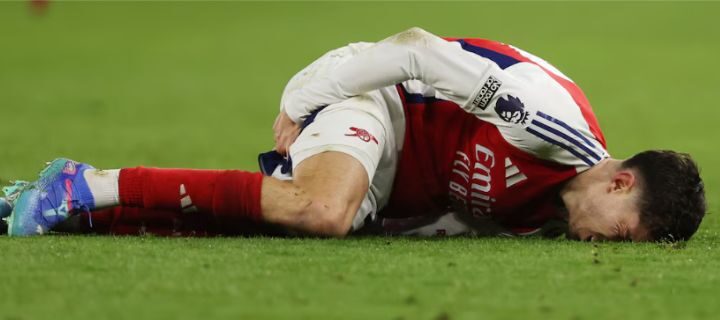
Take a footballer who comes off the pitch with groin pain. We can examine the area, establish a diagnosis, and begin restoring strength. Those are necessary steps. But if our goal is to return that player to football, a more demanding question sits behind them: Can this person do everything the game will ask of them, and can they do it repeatedly when they no longer control what happens next?
For years, like many clinicians, I began with the injury. I wanted to know what structure was involved and how to treat it. I still want to know those things. What changed over time was my appreciation of how much I could miss if I stopped there. Naming the injury might tell me what hurts. It does not necessarily tell me why this person ran out of options in that moment, or what they will need to regain before they can play freely again.
Understanding the person takes time. A history and an examination give us an initial picture, but each session adds another layer. How was the player moving before the injury? What demands had changed? What had they been managing in training, competition, and life? What can they do now, and what happens when we ask for a little more? The answers rarely arrive all at once. We build a working hypothesis, test it, and revise it as the person shows us more.
An athlete may describe a “pulled groin,” yet their pain does not always point neatly to a torn muscle. Even when an adductor injury is clear, the tissue finding cannot explain the whole return to play. Pain and tissue damage do not have a simple one-to-one relationship. Some people have striking findings on imaging and little pain. Others have significant pain without an obvious structural finding. We need to take both the symptoms and the tissue seriously while staying curious about the wider picture.
I often use driving as an analogy. When we learn to drive, we are taught to leave enough space between our car and the one ahead. That distance gives us time to recognize a change and respond before a sudden stop becomes a collision. Athletes need their own version of that space. Physical capacity creates some of it. So do useful movement options, coordination, recovery, and sensible management of training and competition demands.
Those car lengths can gradually disappear. A player may still be performing, but with fewer ways to solve the problems the game presents. Perhaps they have been carrying an unusually heavy workload. Perhaps a particular movement is poorly controlled, or they have learned to avoid loading an area that once hurt. Perhaps stress outside sport is affecting how they recover. Then one ordinary action becomes the moment when the remaining space runs out. The change of direction gets blamed because it was visible. The lead-up was much harder to see.
Our job is to investigate that lead-up without assuming that every injury has a single hidden cause. We need to identify what matters most now, what can wait, and what the player must be able to do before returning. That requires a much better understanding of the activity itself than we sometimes bring to rehabilitation.
I have seen three recurring gaps in this work. First, we may never look closely enough at what the athlete’s sport actually asks of them. Second, we may understand those demands but fail to observe how this particular athlete meets them. Third, we may see how they move but never establish whether they possess the capacity to repeat that movement under meaningful load.
I have watched world-class athletes and artists attempt extraordinary skills requiring mobility, control, and force in positions most people will never encounter. Sometimes the skill has been practised for years without anyone asking whether the person has the physical options to perform it reliably. Skill can conceal a great deal. An athlete may find a way to complete a task while borrowing movement from somewhere else or placing more demand on a structure that is already struggling.
This is where reconditioning becomes an ongoing process of learning. We study the activity. We study the person. We make an informed choice about where to begin, observe the response, and adjust. We do not need a perfect explanation before taking a useful first step. We do need to notice when our explanation fails to account for what happens next. An unexpected response is information. It should change our thinking.
Pain adds another layer. The nervous system is continually interpreting information in context: what is happening in the body, what has happened before, and what the person believes a movement may mean. After injury, an athlete may be physically capable of entering a position yet hesitate when they approach it at speed. They may complete a drill beautifully in the clinic and revert to an old strategy as soon as the ball arrives.
I used to describe this by saying the brain chooses the path of least resistance. I now think safety is often a more useful lens. A protective strategy may be inefficient, but it can feel familiar. If a player was injured while planting and turning, the combination of angle, speed, force, and uncertainty may matter as much to their confidence as the strength of the healing tissue. We cannot simply tell them they are safe. We have to help them experience increasing demands successfully, while paying attention to what their body actually does.
That is why I distinguish between capability and capacity. Can the athlete produce the movement strategy they need? Then can they produce it with greater force, at speed, repeatedly, and in the unpredictable setting where it matters? These questions lead to a progression, but they also keep us from mistaking a successful isolated exercise for readiness to play.
Imagine our footballer decelerating to change direction. We notice that, as they load one leg, their pelvis drops and their trunk shifts in a way that may be changing the demand around the groin. That observation is not a diagnosis, and the movement is not automatically “wrong.” We need to determine whether it limits this player’s ability to manage the task, especially as the demands rise.
We might first explore whether they can control movement between the pelvis and femur at a slower pace. Then we can develop that control through strength work and increasingly demanding positions. From there, we add braking, acceleration, sharper changes of direction, greater speed, and repetition. At each stage, we watch what changes. Does the player have another option available, or do they return to the same strategy when the task becomes difficult?
To me, that is the useful meaning of specificity. It is more than choosing exercises that look like football. It means identifying the movement and force demands within football, developing the athlete’s ability to meet them, and checking whether that ability survives when the game becomes faster and less predictable.
The transition onto the pitch is where this work is truly tested. Add a ball, another player, a tactical decision, and the pressure to respond immediately, and years of familiar habits come back into play. The athlete is no longer thinking about the strategy they practised in rehabilitation. They are playing football. We need to see whether the new capability has become available within the game, and if it has not, we need to keep working with them in that setting.
Good measurement helps us make those decisions. Strength and force data, repeated exposure to higher speeds, movement observations, symptoms, and the athlete’s own account of confidence all contribute to the picture. None tells the whole story alone. Athletes can compensate remarkably well, and a drill can look convincing long before the player is ready for the demands of competition. Useful testing helps us see what is improving, what remains uncertain, and whether we are asking for the next step too soon.
Reconditioning asks us to hold the whole picture together. We care about tissue healing and strength. We also care about how the person moves, what the activity demands, how they respond when those demands increase, and whether the gains we see in a controlled setting carry into real life. The injury may be what brought them to us. Understanding everything required beyond the injury is what gives them a better chance to return.
Step out of the frame….